
Permit and burrows before the machine
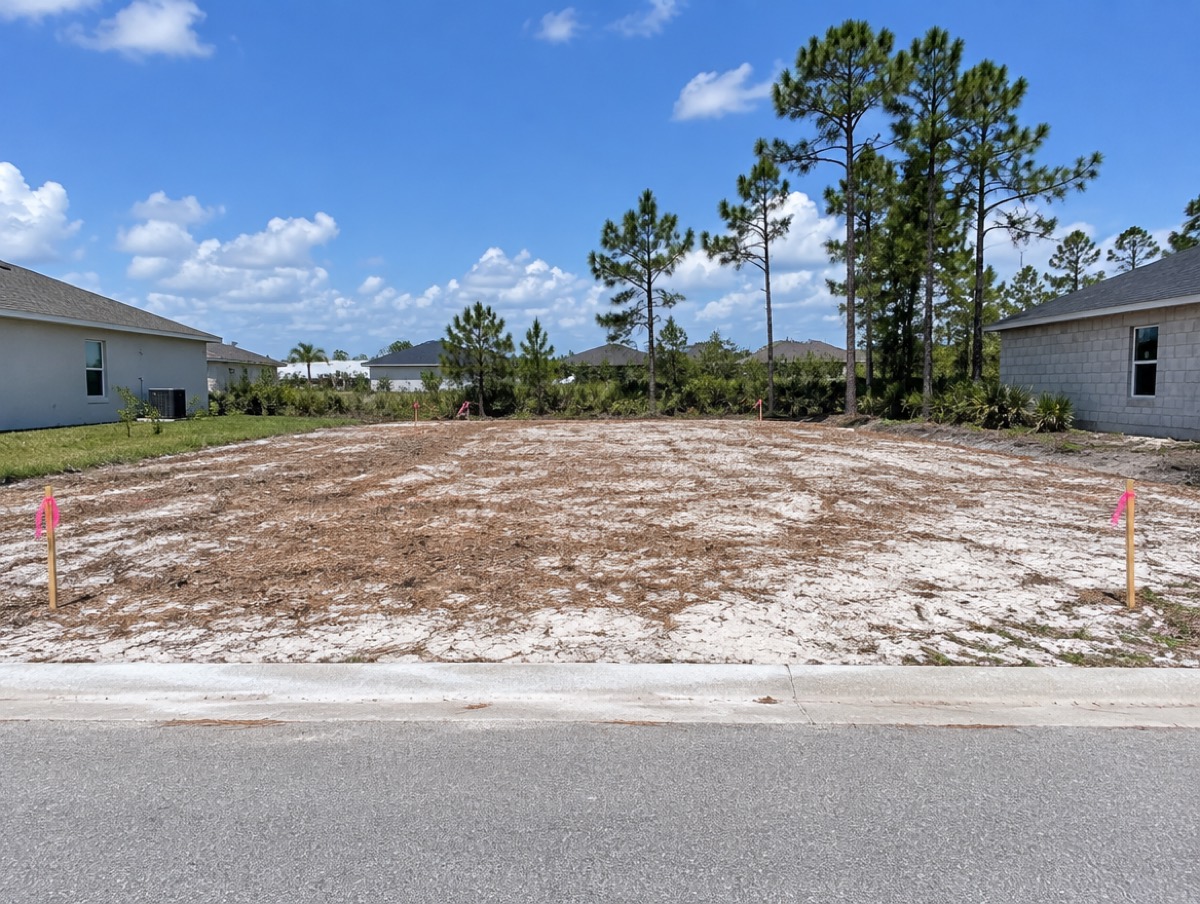
The machine work is often the short part. The paperwork comes first. In Palm Bay, a residential lot under 1 acre needs a permit for any land clearing, and clearing for a new single- or two-family home has to wait until a building permit is under review (Palm Bay Code s. 175.014). So on a Port Malabar quarter-acre, line up the builder before the clearing. In unincorporated Brevard, Merritt Island included, the county wants a permit before land clearing unless the property is exempt (Brevard County Code s. 62-4337).
Then walk the lot for gopher tortoise burrows. Under FWC rules, clearing, grading or digging within 25 feet of a burrow that might be occupied needs a relocation permit, and work kept 25 feet or more away needs none (FWC gopher tortoise permits). A burrow under palmetto is easy to miss. Low, scrubby oaks on bright white sand are worth a second look too, because that can be scrub-jay habitat. Read the scrub-jay guide before anyone quotes a lot like that.
Mulch it or haul it
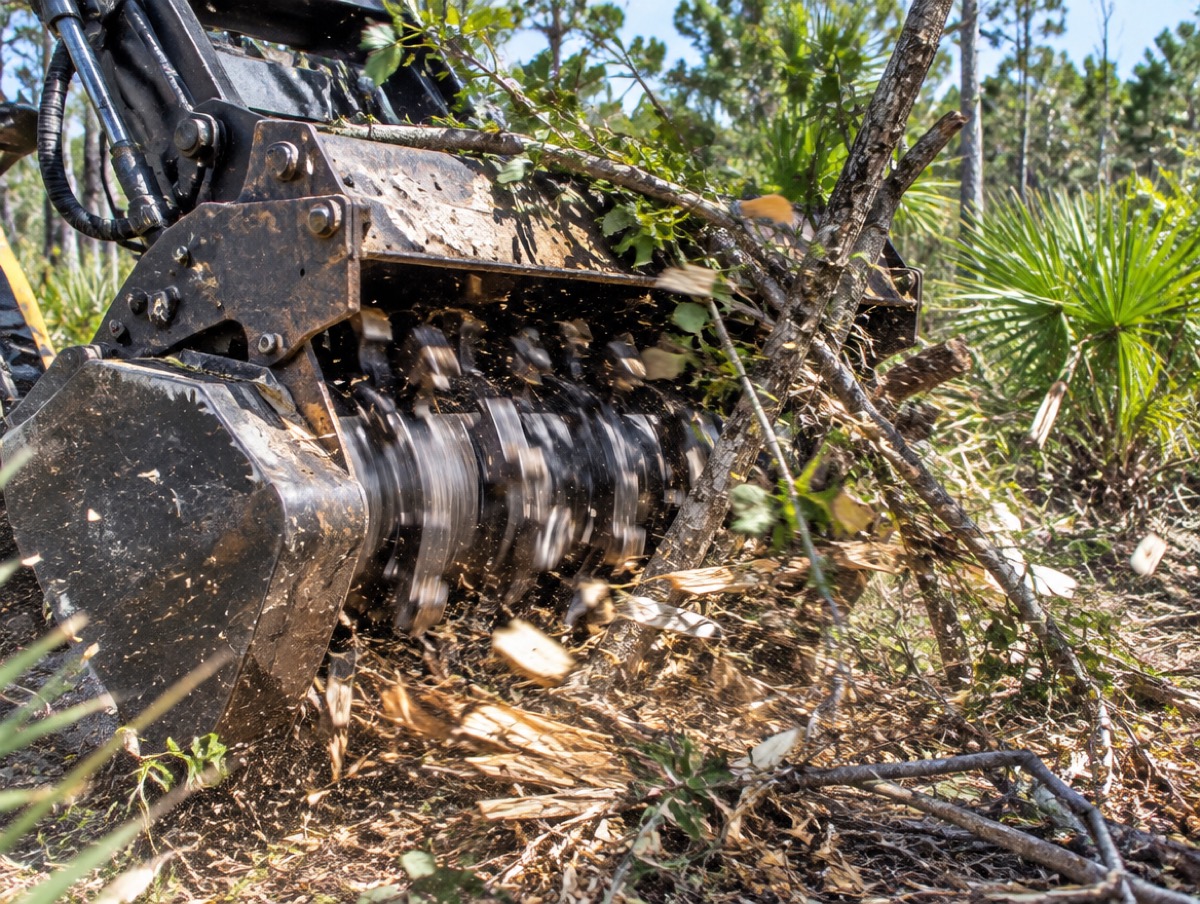
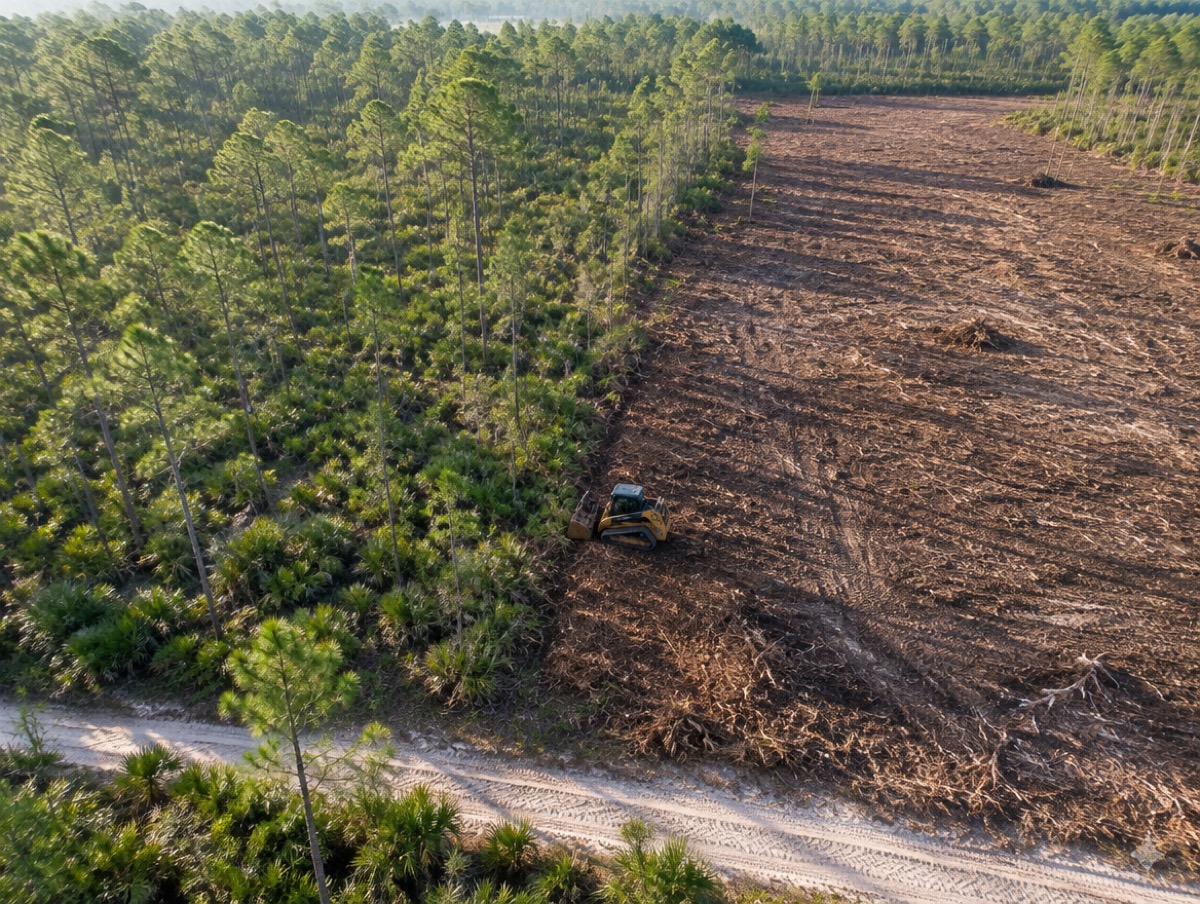
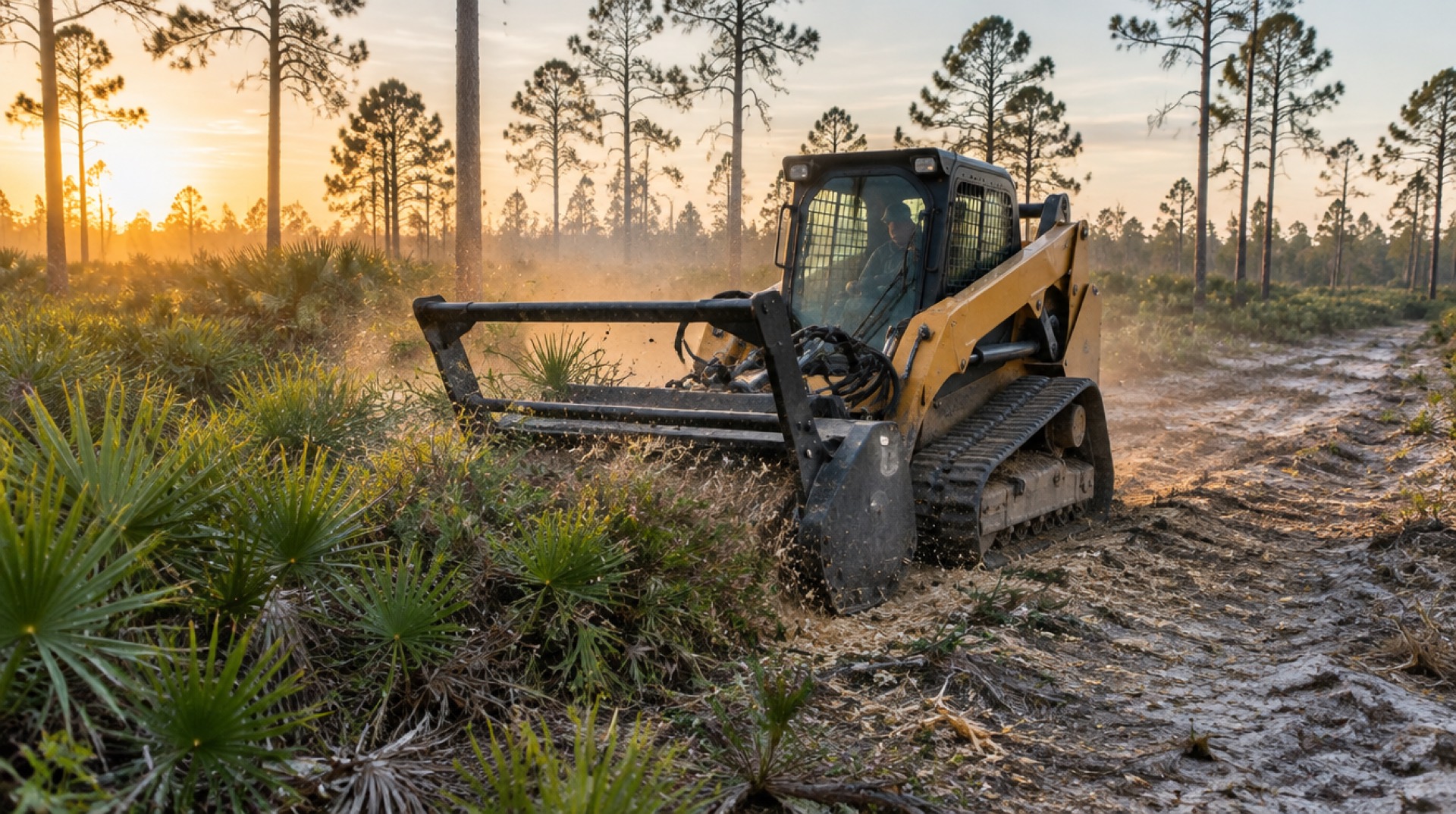
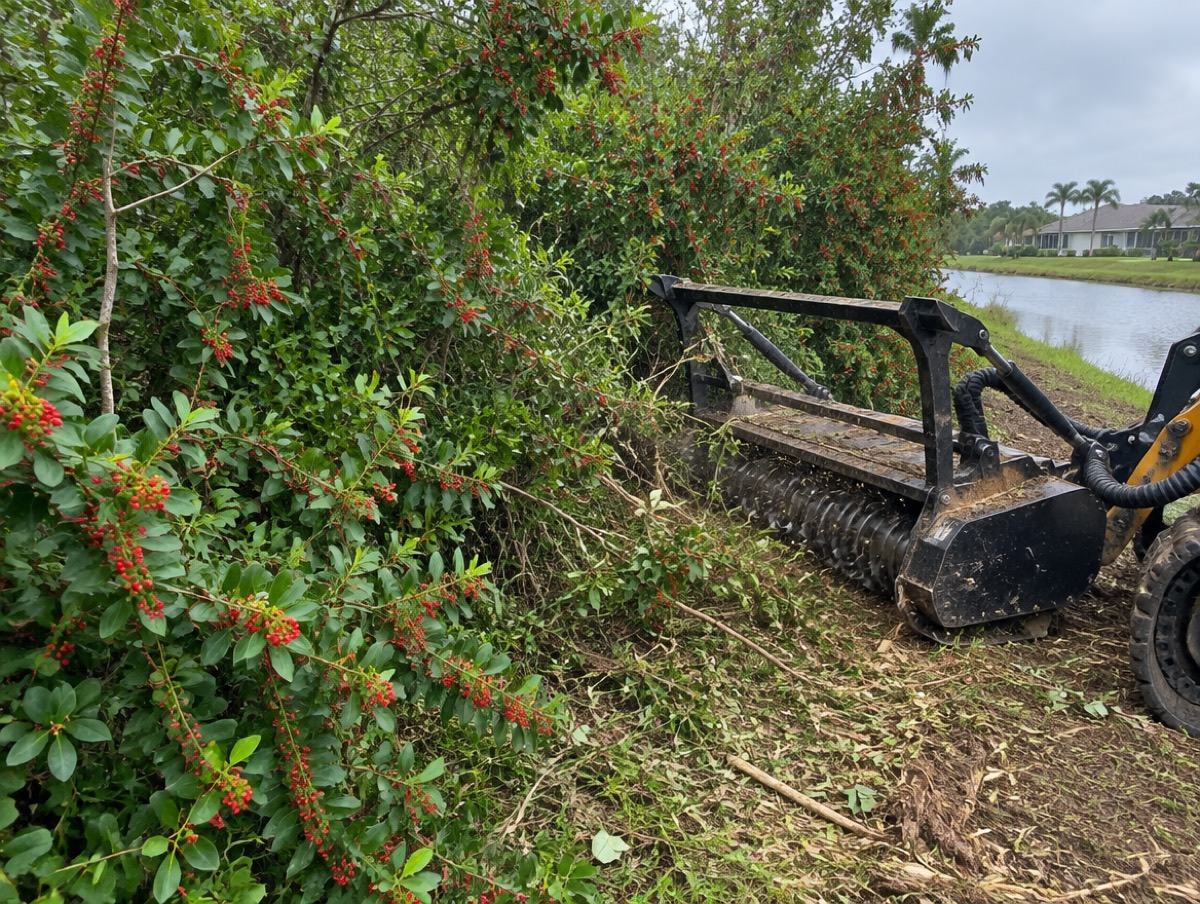
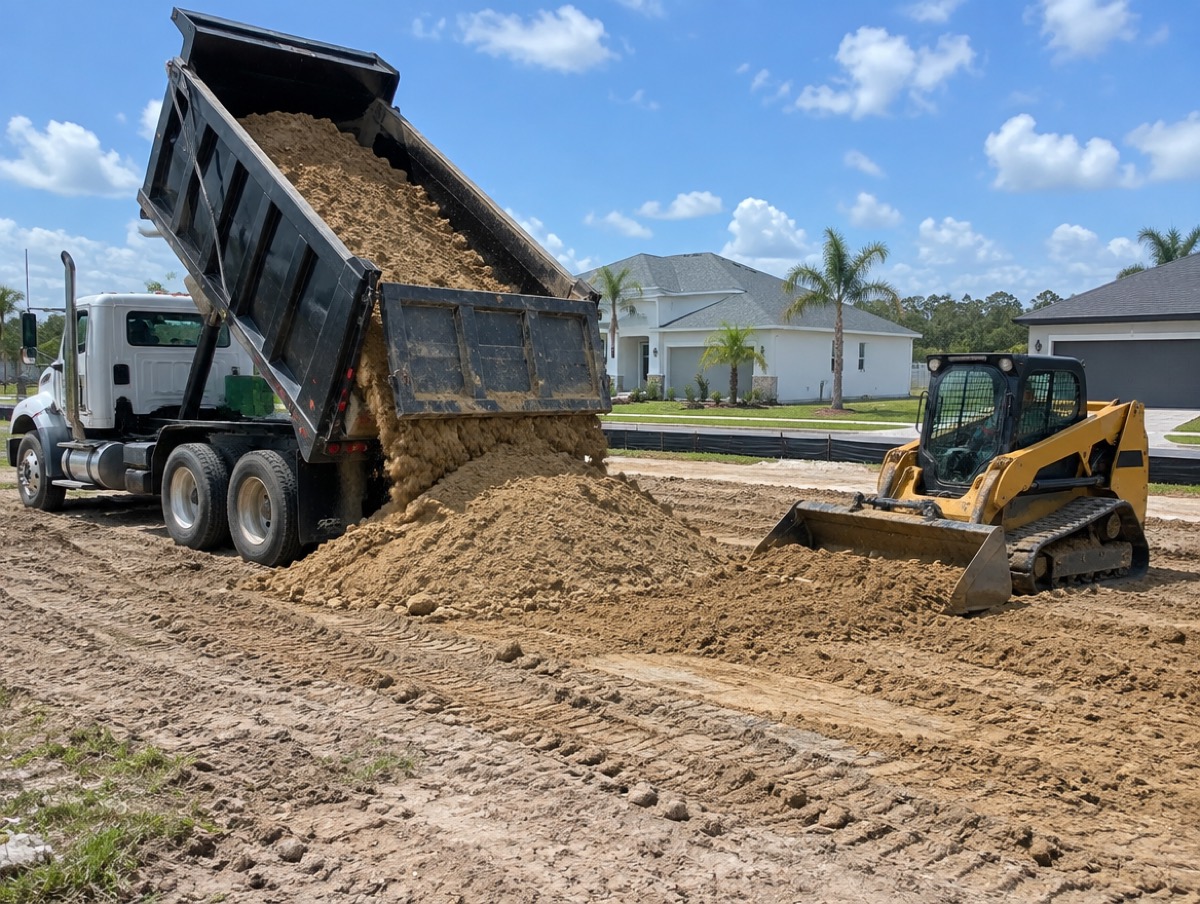
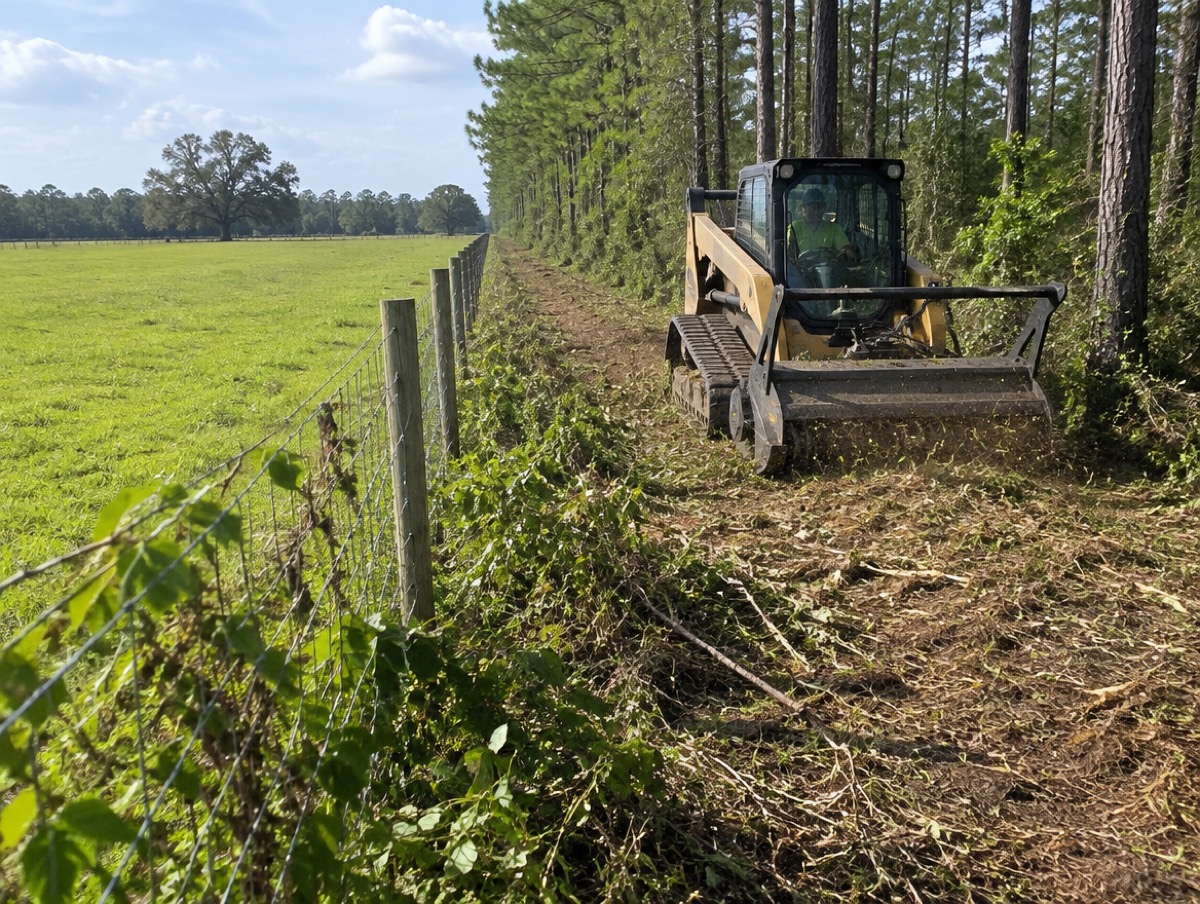
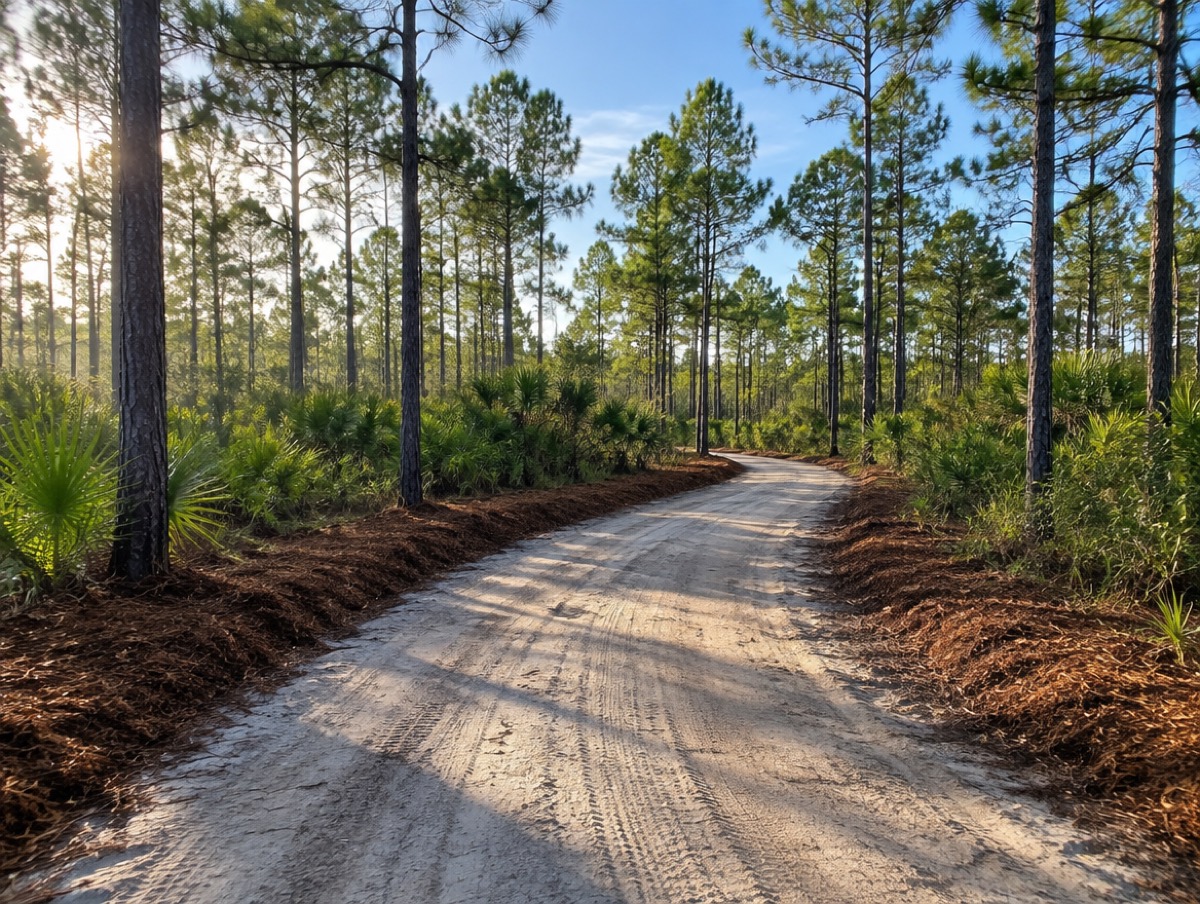
What happens to the cut material moves the price about as much as the clearing does. A forestry mulcher grinds palmetto, brush and small trees where they stand and leaves the chips on the ground. Hauling takes it all away and leaves bare sand, which some builders want for the pad.
Burning is off the table on most house lots. Every land clearing pile burn needs Florida Forest Service authorization, and residential piles have to sit 300 feet from occupied buildings other than the owner's, 100 feet from paved public roads and 50 feet from brush (FFS, Know the Law). A quarter-acre lot with houses on both sides can't meet those distances.
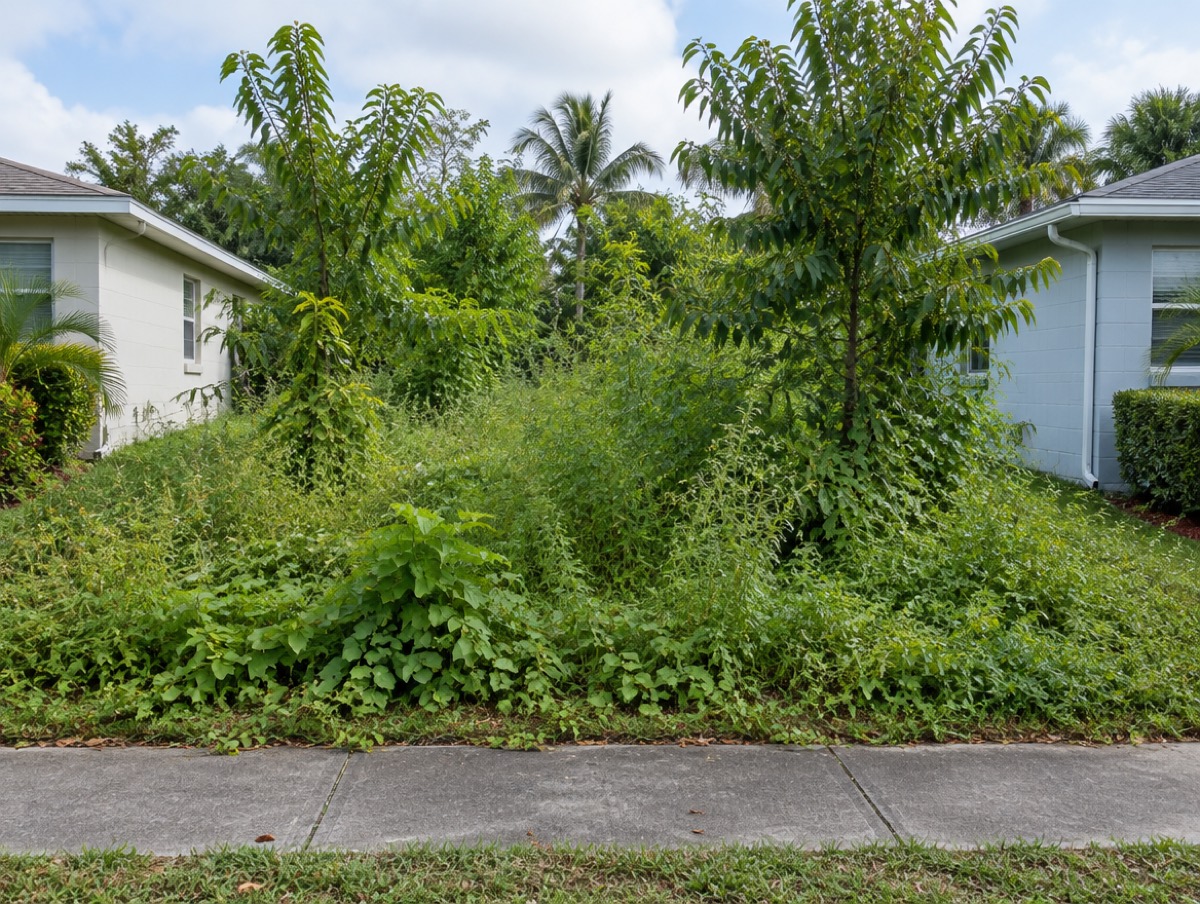
Brazilian pepper is the one that comes back. UF/IFAS says large stands resprout vigorously after mechanical removal, so herbicide or stump treatment is usually needed (UF/IFAS plant directory). If pepper has taken over a pond bank or a fence line, ask what follow-up the price includes.
No house number, or you live out of state
Plenty of Palm Bay lots belong to owners who live out of state, and a vacant lot often has no house number yet. The form still works. It takes a parcel ID or the nearest cross streets, and the parcel ID is on your tax bill and in the Property Appraiser's records. You can text photos to (321) 604-1285 instead of meeting anyone at the lot.
A couple of phone photos from the road help more than a long description. Shoot the thickest part of the growth so the crew can tell palmetto from pine from pepper, and get any tree you want to keep in the frame. Asking costs nothing. The crew prices the job before any work starts.
North county to south county
Up north the jobs are acreage around Mims and Scottsmoor and outside Titusville. Then come brushy tracts along I-95 near Cocoa, underbrush beneath the oaks on Merritt Island, new streets in Viera and infill lots between finished houses in Melbourne.
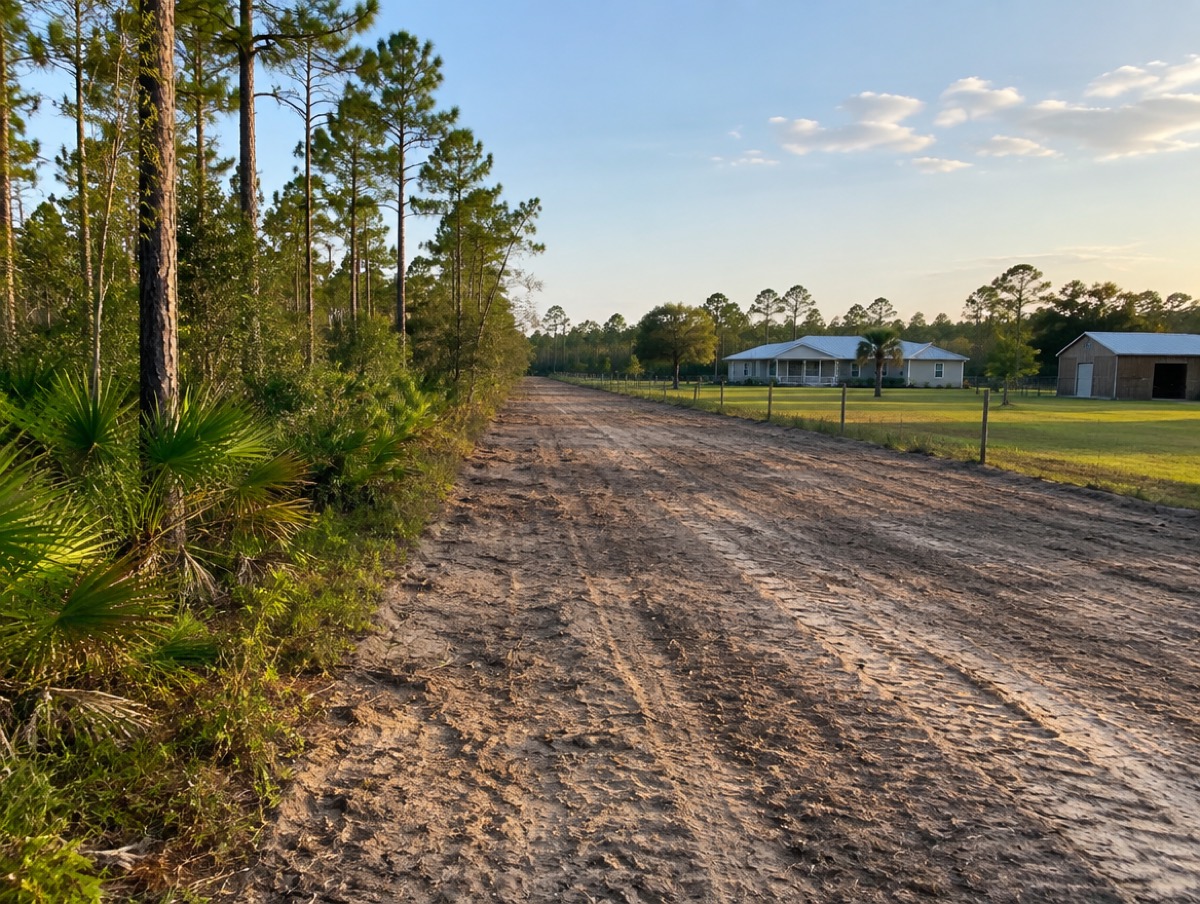
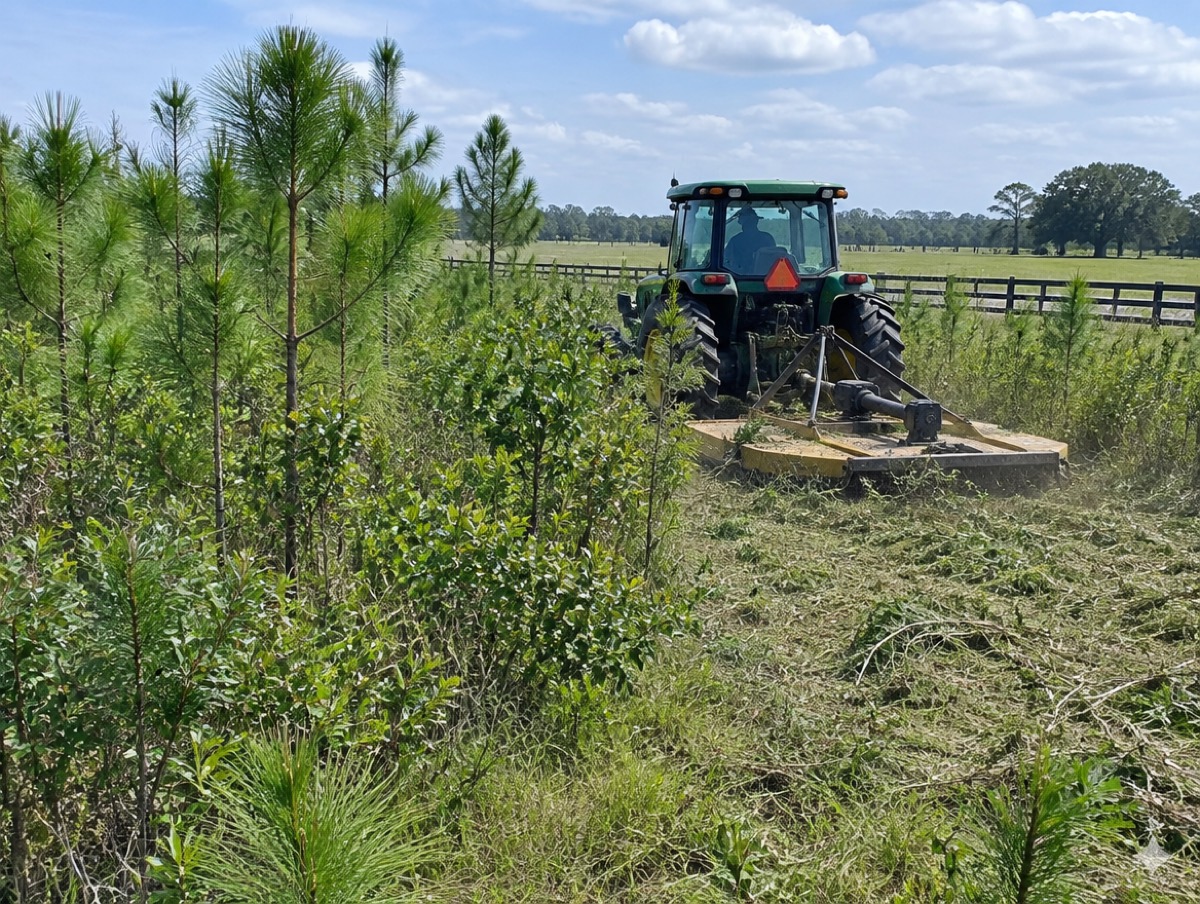
Palm Bay is the quarter-acre lots. South of Malabar Road and west of Babcock Street, whole blocks of Port Malabar lots are still saw palmetto. Below that, Grant-Valkaria and Micco trade lots for acres. Horse pasture left alone goes back to palmetto and pine. The pasture reclamation page covers opening it back up.
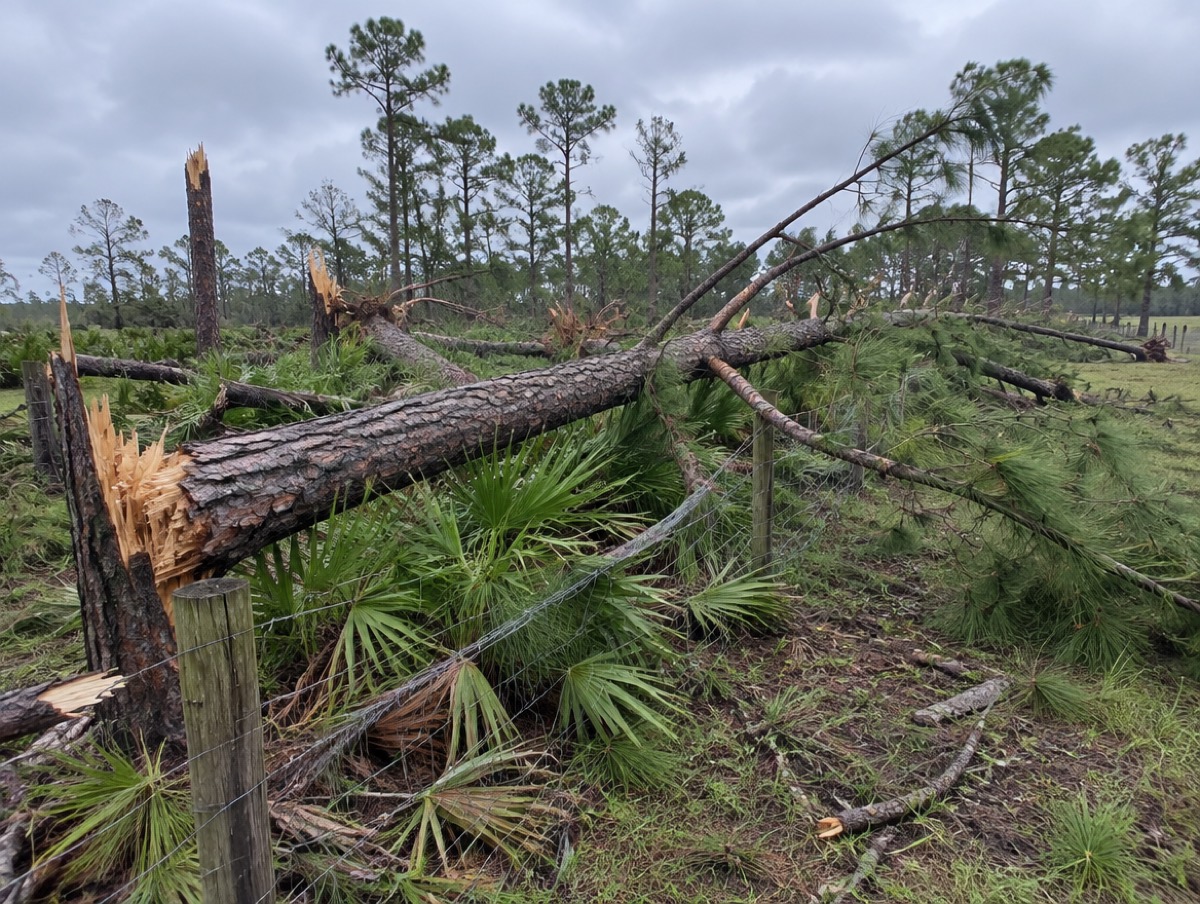
After a hurricane the calls change. Pines down across a driveway, tops snapped and hung in the oaks, a fence line buried in limbs. The storm debris page covers that.