What reclaiming a pasture involves
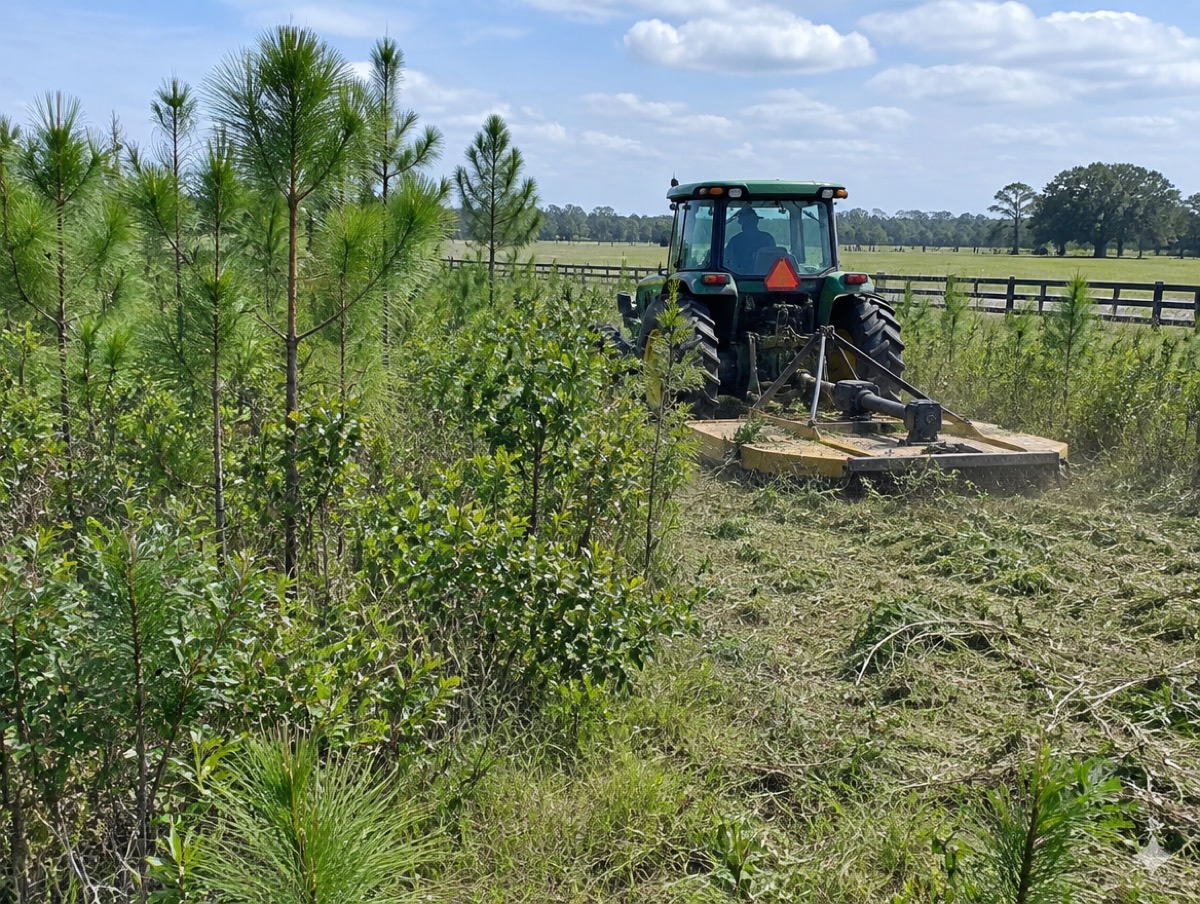
The job is putting grass back in charge. That usually means mulching the brush and saplings, taking out pepper and other invasive trees, clearing the fence lines so they can be fixed, and pulling or grinding stumps anywhere a mower or hay equipment will run. Good shade trees stay.
Work it in order. Fence lines and access come first, so the crew can get in and you can see the boundary. Then the open ground, then the edges. Big tracts can go in phases, which spreads out the cost and lets you see how the grass comes back.
The agriculture exemption, and its limits
Brevard County exempts bona fide agriculture from its land clearing rules (Brevard County Code s. 62-4334), and Palm Bay's tree code has a bona fide agriculture exception too (s. 175.014). Whether your property and use qualify is the county's or city's call, so ask before work starts.
A local exemption doesn't change state and federal rules. No one may take, harass or move gopher tortoises or damage their burrows without an FWC permit (FWC gopher tortoise rules). Bald eagles are protected by state and federal law, and FWC recommends a 660-foot buffer from nests during land clearing (FWC). Wetland permits are a separate question too.
Invasives in the pasture
Brazilian pepper is on Florida's Noxious Weed List. Cut a large stand and it resprouts vigorously, which is why herbicide or stump treatment is usually needed (UF/IFAS). Air potato and melaleuca are Category I invasives as well (UF/IFAS, air potato; UF/IFAS, melaleuca). Getting them out of a pasture is a two-step job: cut, then come back for what resprouts.
Wet spots, ditches and ponds
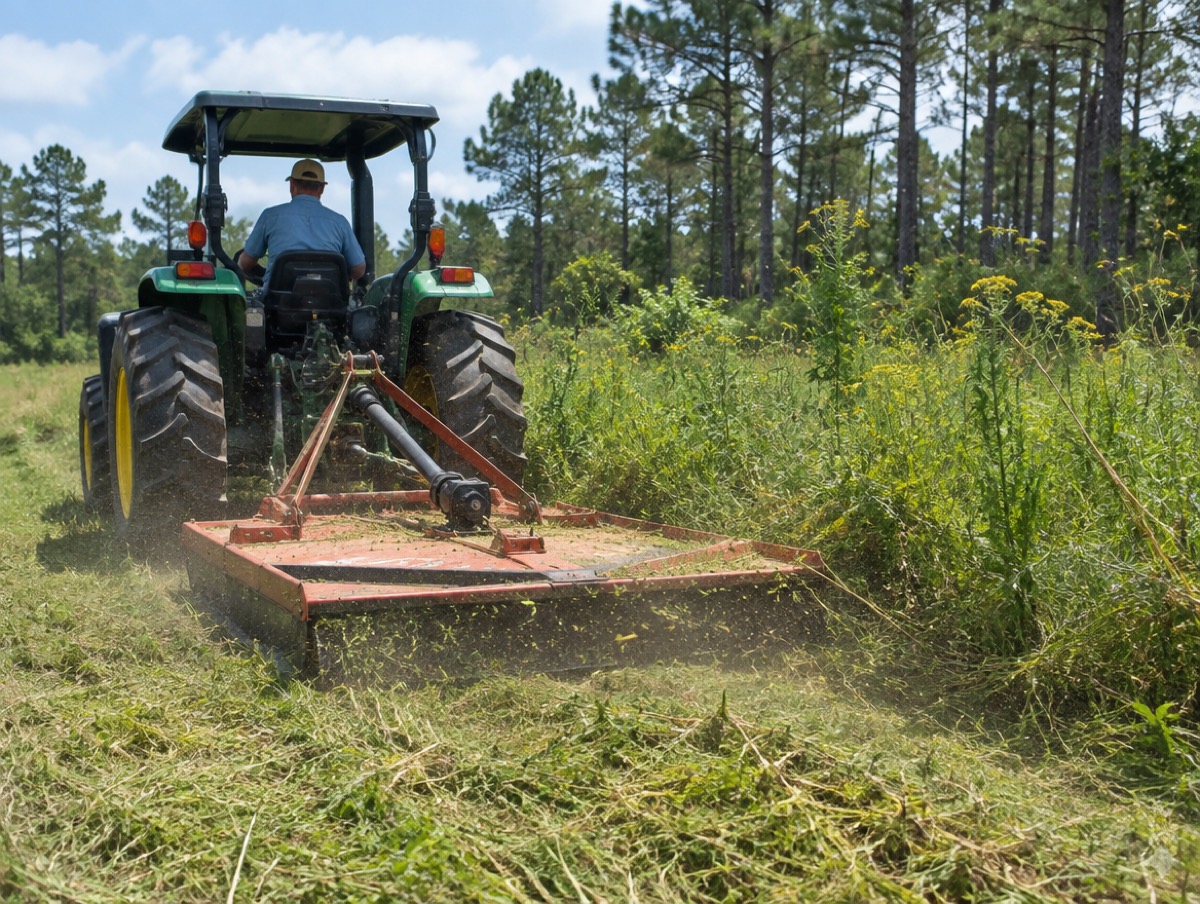
If the pasture runs down to a wet slough, a ditch or a pond, slow down there. Filling wetlands or building in them may need an Environmental Resource Permit from the St. Johns River Water Management District or FDEP (SJRWMD). Brevard's code also limits how invasive plants come out of shoreline buffers and wetlands, calling for hand-clearing, roots left in place and aquatic-approved herbicide (s. 62-4334). Ask the county how that applies to your land, and flag the wet edges before the mulcher arrives.
Wildlife on open ground
Gopher tortoises dig in dry, sandy ground, and pasture ridges can hold burrows. FWC requires a permit for clearing or site work within 25 feet of a potentially occupied burrow (FWC). Walk the pasture, flag the burrows and keep machines clear. Check FWC's eagle nest map too.
Questions for the crew
A pasture job runs over days, sometimes weeks. Get these settled first:
- Which trees stay for shade, and are they flagged?
- How are stumps handled where the mower will run?
- What's the plan for pepper resprouts?
- How will they stay off wet areas and burrows?
- Is fence line clearing part of the price?
Questions people ask
Does farm land need a clearing permit in Brevard?
Brevard's code exempts bona fide agriculture from its land clearing rules, and Palm Bay has a similar exception. Whether your operation qualifies is up to the county or city. Wildlife and wetland rules apply either way.
Will pepper come back after the pasture is mulched?
Large pepper stands usually do unless the stumps are treated, according to UF/IFAS. Plan for treatment and a return visit. See Brazilian pepper removal.
Can the brush piles be burned?
Agricultural and pile burns need Florida Forest Service authorization under Rule 5I-2.006, which also sets setbacks (Rule 5I-2.006, F.A.C.). State-permitted burns are excluded from Brevard's drought ban on open burning (s. 50-1), so the FFS authorization is the deciding step. Mulching sidesteps the question.
Should some trees stay in a pasture?
Usually. Shade matters for livestock, and UF/IFAS rates live oak and cabbage palm among the most wind-resistant trees in this region (UF/IFAS FR173), so sound ones near the fence or water are worth keeping.
Can the area around the pond be cleared?
Carefully. Wetlands and shoreline buffers have their own rules, and filling or building in a wetland may need a state permit. Clear the uplands first and ask the county before working at the water's edge.
Last reviewed October 7, 2026. General information, not legal or professional advice. Check the linked sources for the current rules.
Sources
- Brevard County Code s. 62-4334, exemptions
- Palm Bay Code of Ordinances, Chapter 175 (tree protection and land clearing)
- FWC, Gopher tortoise rules and regulations
- FWC, Bald eagle frequently asked questions
- UF/IFAS Plant Directory, Brazilian peppertree
- UF/IFAS Plant Directory, Air potato
- UF/IFAS Plant Directory, Melaleuca
- St. Johns River Water Management District, do you need a permit?
- FWC, Gopher tortoise permits
- Rule 5I-2.006, Florida Administrative Code (open burning)
- UF/IFAS, Wind and Trees: Lessons Learned from Hurricanes (FR173)