Which trees are worth keeping
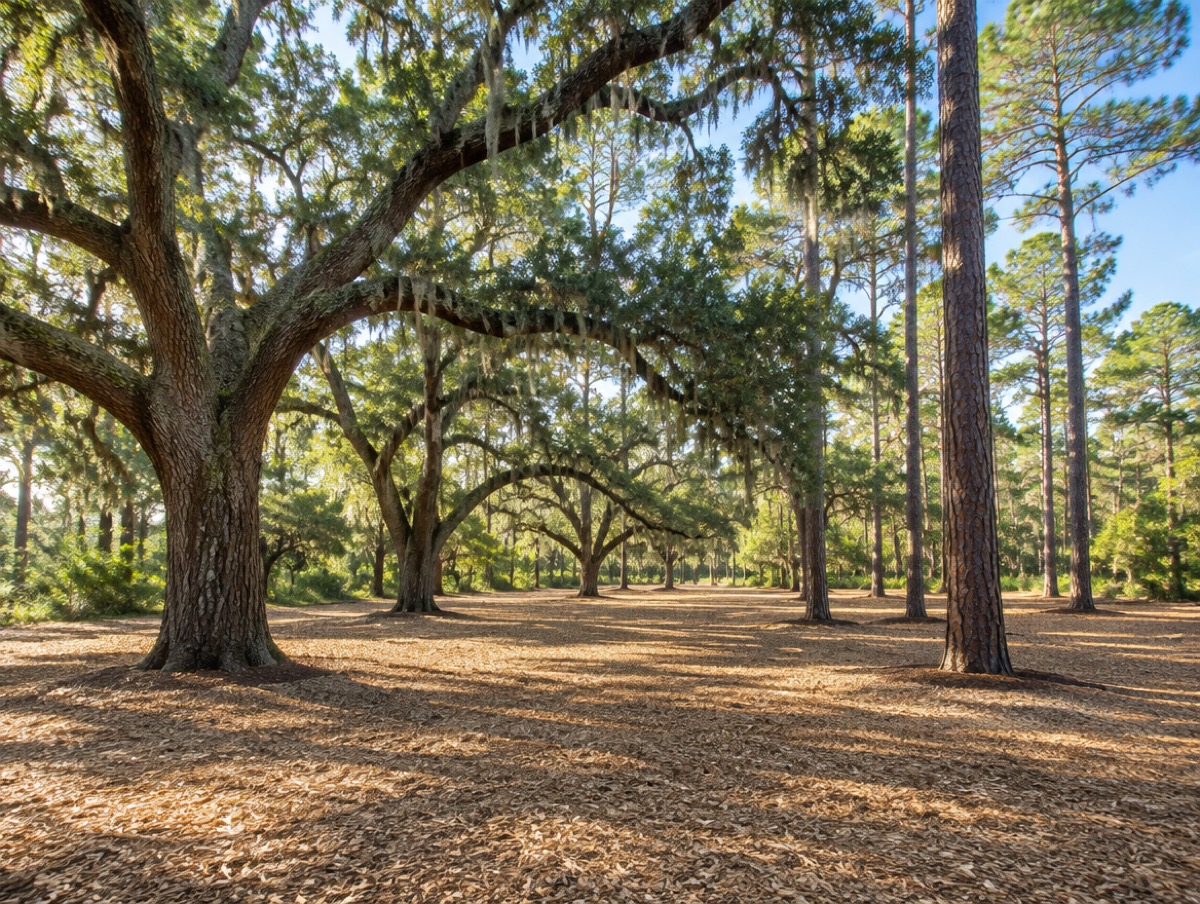
UF/IFAS looked at how Florida trees held up through hurricanes. In its Southeastern Coastal Plain ratings, live oak, sand live oak and cabbage palm rate highest for wind resistance, slash pine rates medium-low, and laurel oak, water oak and sand pine rate lowest. The same publication notes that no tree is wind-proof (UF/IFAS, Wind and Trees).
Laurel oak deserves a hard look. According to UF/IFAS it usually lives about 50 to 70 years, and decay often hollows out its trunk and large limbs (UF/IFAS ST549). A big laurel oak right where the garage goes may not be the one to save.
Condition counts as much as species. A hollow trunk, a big dead limb or a lean toward the house changes the answer for any tree.
The code may decide some of it
In unincorporated Brevard, protected trees start at 10 inches in diameter at breast height for hardwoods and 14 inches for pines and other softwoods on the mainland and Merritt Island. On the barrier island both thresholds drop to 1.5 inches. Specimen trees are hardwoods or softwoods in good condition at 24 inches or more. Diameter is measured 4.5 feet above grade, and invasive species don't count (Brevard County Code s. 62-4332). The county's small scale clearing permit can't approve removing a specimen tree at all (s. 62-4338).
Palm Bay's application asks for a site sketch showing the diameter and species of every tree on the parcel and which ones will stay (s. 175.014). Among the reasons the city accepts for removing a tree are construction needs, including up to a 10-foot equipment access path, and it also points to alternative site plans that keep protected or specimen trees (s. 175.003).
Titusville sorts protected trees into Significant (14 to under 20 inches), Specimen (20 to under 46) and Heritage (46 and up), with palms left out (Titusville LDR s. 30-31).
Keeping a tree alive through construction
Saving a tree during clearing is half the job. The other half is the months of building that follow. Brevard's code counts as land clearing anything that harms a tree's viability, including soil compaction, machinery hitting the trunk or roots, fuel or herbicide spilled over the roots, materials stored under it, and grade changes from digging or filling over the root system (s. 62-4338).
Turn that list into site rules. Fence off the ground under the canopy before the first machine arrives. Keep trucks, block pallets and the portable toilet outside it. Don't let fill get pushed up against the trunk. Tell the builder the fence stays until final grade.
Palm Bay can require replanting when specimen trees are lost in a violation: one native canopy tree, at least 5 inches in diameter and 15 feet tall, for every 6 inches of specimen tree removed (Palm Bay Code, Chapter 175).
Mark it before the machine shows up
Walk the lot with the crew. Tie ribbon on every tree that stays, in one color only, and photograph each one. Paint on the trunk is easier to see from a machine seat if you don't mind the mark. Write the kept trees into the price, by count and by location.
- How will they work around kept trees: mulcher, hand crew or both?
- Who fences the root zones, the clearing crew or the builder?
- What happens if a kept tree gets hit?
- Are the trees coming out cut and hauled, or mulched?
Questions people ask
Should I keep any trees when clearing to build?
Usually some. Palm Bay's application asks which trees will stay, the county protects trees above set sizes, and a sound live oak gives shade that new plantings won't match for years. Keep healthy, wind-firm trees that sit clear of the house and driveway.
What counts as a protected tree in Brevard?
Outside city limits, hardwoods 10 inches or more in diameter at breast height and pines or other softwoods 14 inches or more, on the mainland and Merritt Island. On the barrier island it's 1.5 inches for both. Cities set their own sizes; Palm Bay's permit threshold is 6 inches. The permit guide has each one.
Can a specimen tree come out?
Sometimes, with the right permit. The county's small scale permit can't approve it, so it goes through full review. Palm Bay ties replacement trees to specimen trees removed in a violation, so get the permit first.
Does selective clearing cost more than clearing everything?
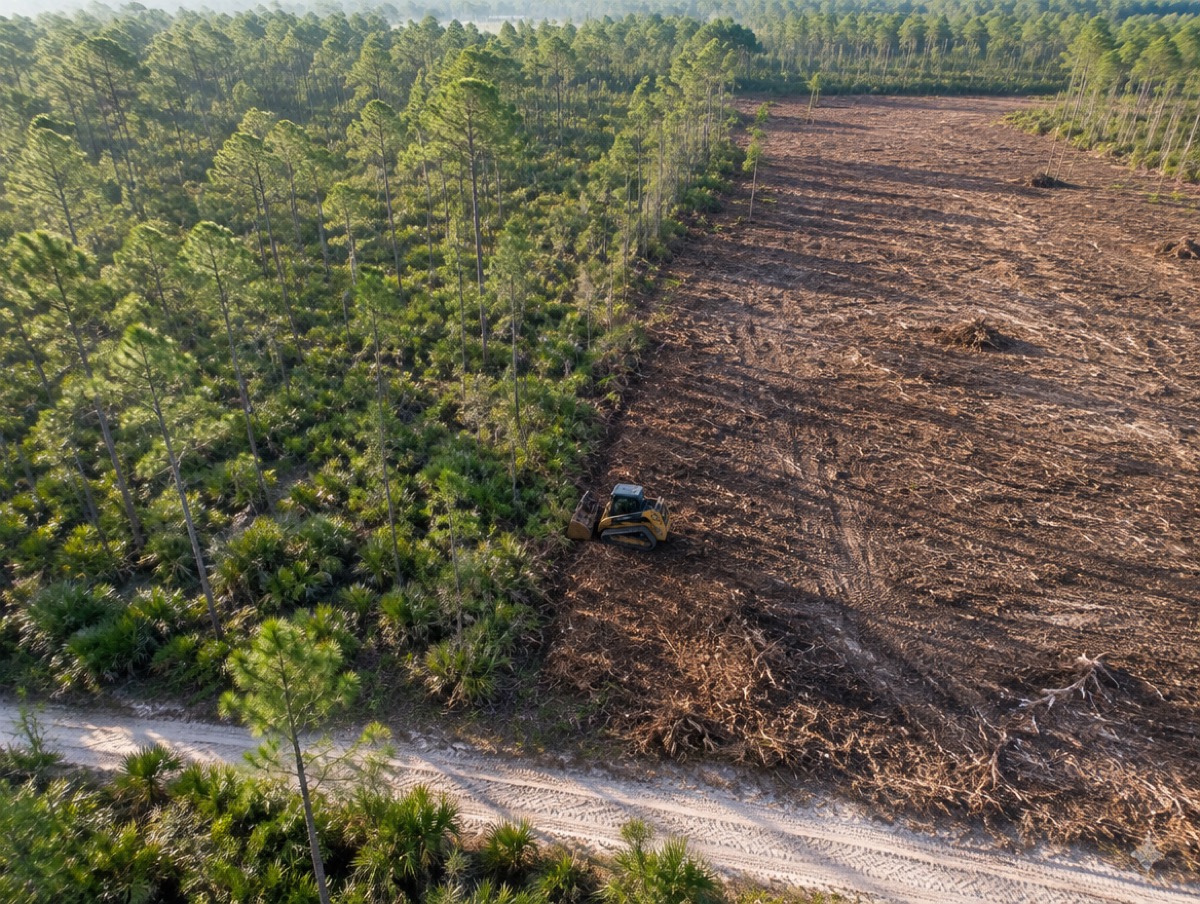
It takes more care around each kept tree, and that time shows up in the price. The crew prices it after walking the lot. The cost guide covers the factors.
What if a kept tree is damaged during construction?
Prevention is the real fix. In the unincorporated county, harm to a kept tree's viability counts as land clearing (s. 62-4338), so the root zone fence protects the permit as much as the tree. Ask the builder to keep it up until final grade.
Last reviewed October 7, 2026. General information, not legal or professional advice. Check the linked sources for the current rules.
Sources
- UF/IFAS, Wind and Trees: Lessons Learned from Hurricanes (FR173)
- UF/IFAS, Laurel oak fact sheet (ST549)
- Brevard County Code s. 62-4332, definitions
- Brevard County Code s. 62-4338, land clearing permit standards
- Palm Bay Code of Ordinances, Chapter 175 (tree protection and land clearing)
- Palm Bay Code s. 175.003, criteria for tree removal
- Titusville LDR, Chapter 30 tree classes and surveys (s. 30-31 and s. 30-40)