Grind it or pull it
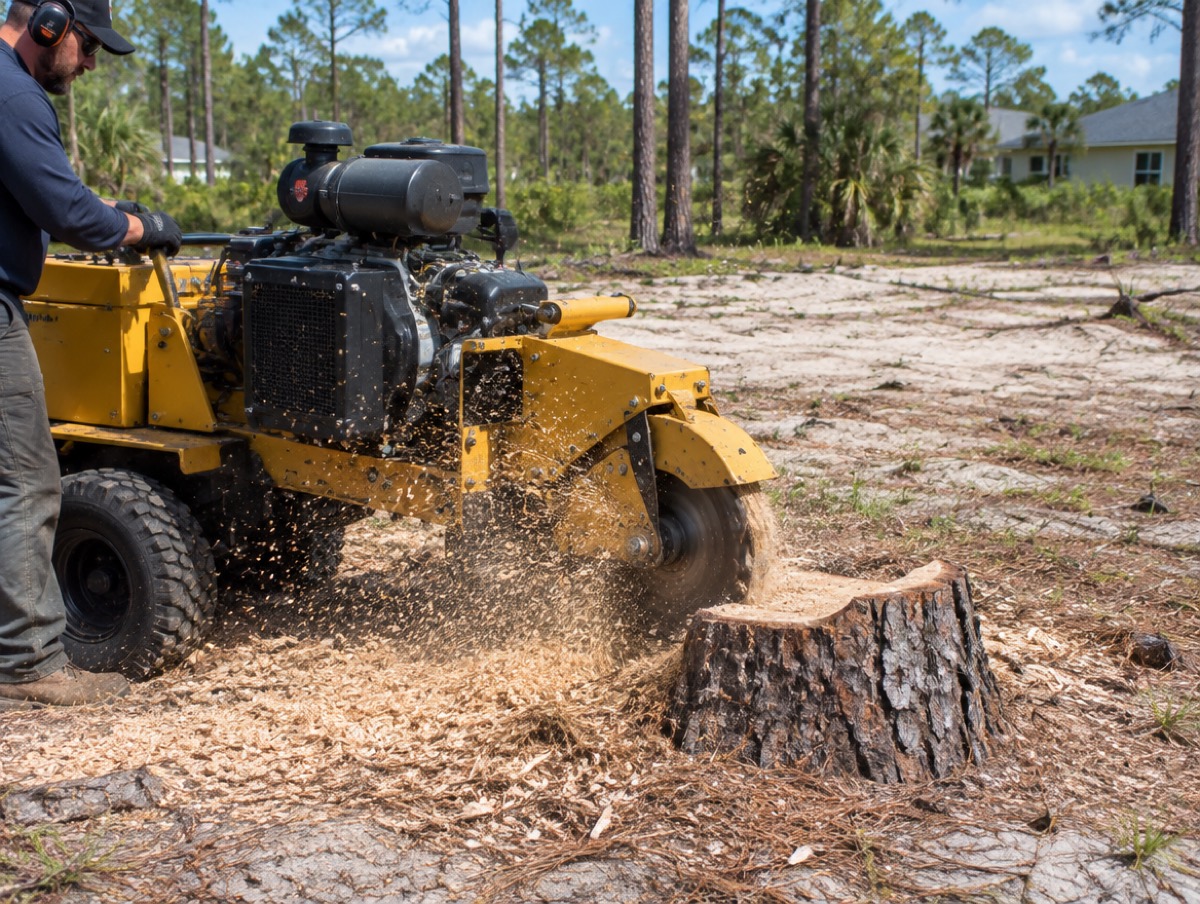
A stump grinder cuts the stump down below the surface with a spinning toothed wheel. The roots stay in the ground and the hole fills with chips. It's quick and tidy and barely marks the ground around it.
Pulling, sometimes called extraction, is an excavator job. The machine digs around the stump and lifts it out with the root ball, leaving a hole to backfill and a stump to haul. It's rougher on the lot, but there's no buried stump left to rot.
Under a house pad, many builders want stumps and major roots out rather than ground, since buried wood breaks down and the ground over it can settle. In the yard or along a fence, grinding is often enough. Ask your builder which they want before anyone prices the job.
Call 811 before anyone digs
Both methods break ground. Sunshine 811 has to get notice two full business days or more before digging starts. The day you call, weekends and holidays don't count, and Florida treats grading, moving earth and scraping as digging (Sunshine 811 FAQs). Ask the crew who places the locate request, and wait for the paint and flags before work starts.
Don't assume a vacant lot has nothing buried. A lot in an older Palm Bay or Cocoa neighborhood can have service lines along the front, and a neighbor's irrigation sometimes wanders across a corner.
Stumps that come back
Brazilian pepper is the stump that fights back. UF/IFAS says large stands resprout vigorously after mechanical removal, and herbicide or stump treatment is usually needed (UF/IFAS). Grinding a pepper stump without treating it can simply reset the plant.
If pepper is part of the job, ask how the stumps will be treated and whether the crew will look again in a few months. The Brazilian pepper page has more.
Stumps and the permit clock
If the trees came down under a county land clearing permit, check its date. On a single-family lot it expires 90 days after it's issued, and the Director can extend it by up to 60 days (Brevard County Code s. 62-4338). The county's definition of land clearing includes root-raking (s. 62-4332), so plan the stump work inside the permit window, not months later.
Tortoises matter here as well. FWC requires a permit to dig within 25 feet of a gopher tortoise burrow that may be occupied. No permit is needed when every part of the work stays 25 feet away (FWC).
Questions for the crew
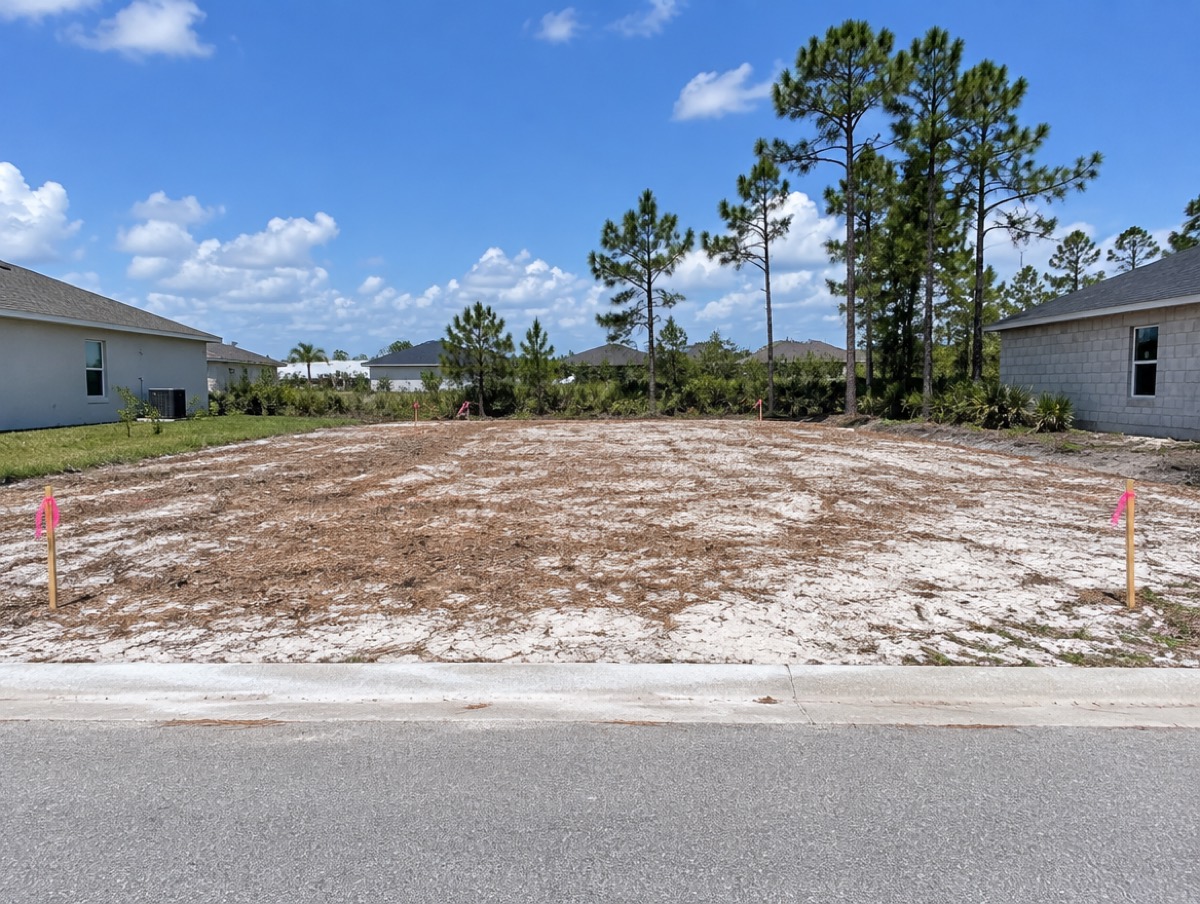
Count the stumps together on the walk and write the number in the price. A missed stump in the pad area costs more once the fill is on.
- How far below grade will the grinder go?
- Are the chips raked out and hauled, or left in the hole?
- If stumps are pulled, who backfills the holes, and with what?
- Are surface roots between the stumps included?
- Is the gate or driveway wide enough for the machine?
- Who places the 811 request?
Questions people ask
Do I have to remove stumps before building a house?
Most builders want them out of the pad and driveway area, because buried wood can rot and the ground can settle. Your builder and their engineer set the requirement, so ask whether ground stumps are acceptable or they want them pulled.
Do I need to call 811 before stump grinding?
Treat it as digging and call. Grinding below grade and pulling stumps both break ground, and Sunshine 811 wants two full business days' notice before digging (Sunshine 811).
How deep does stump grinding go?
It varies with the machine and the job. Ask for a depth in the written price, especially for stumps inside the house pad or where sod is going down.
What happens to the hole?
With grinding, the chips usually fill it, and you can rake them out and top it with sand. With pulling, the hole should be backfilled and leveled; confirm that and the fill material in the price.
Will a ground stump grow back?
Brazilian pepper often will unless the stump is treated. For other species, ask the crew what they see in your area.
Last reviewed October 7, 2026. General information, not legal or professional advice. Check the linked sources for the current rules.