What the machine does
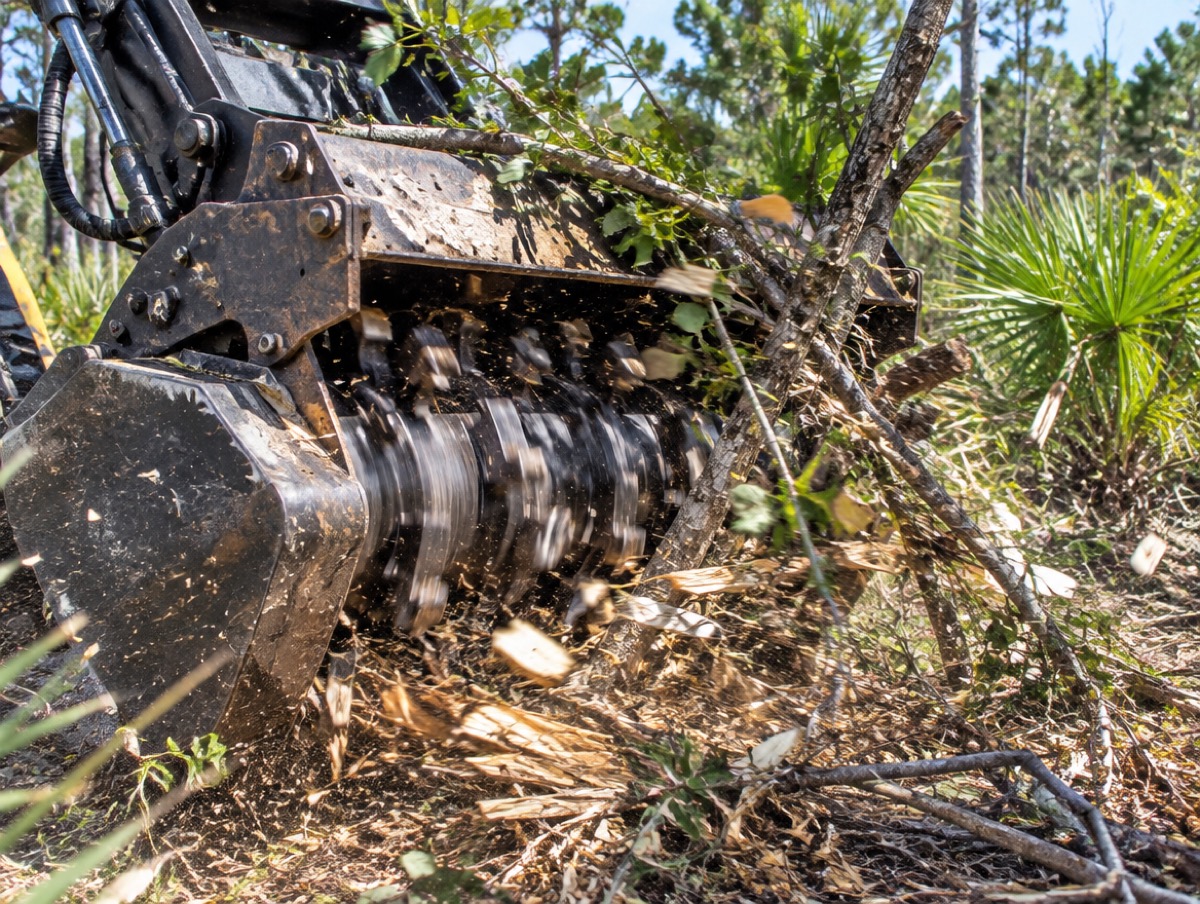
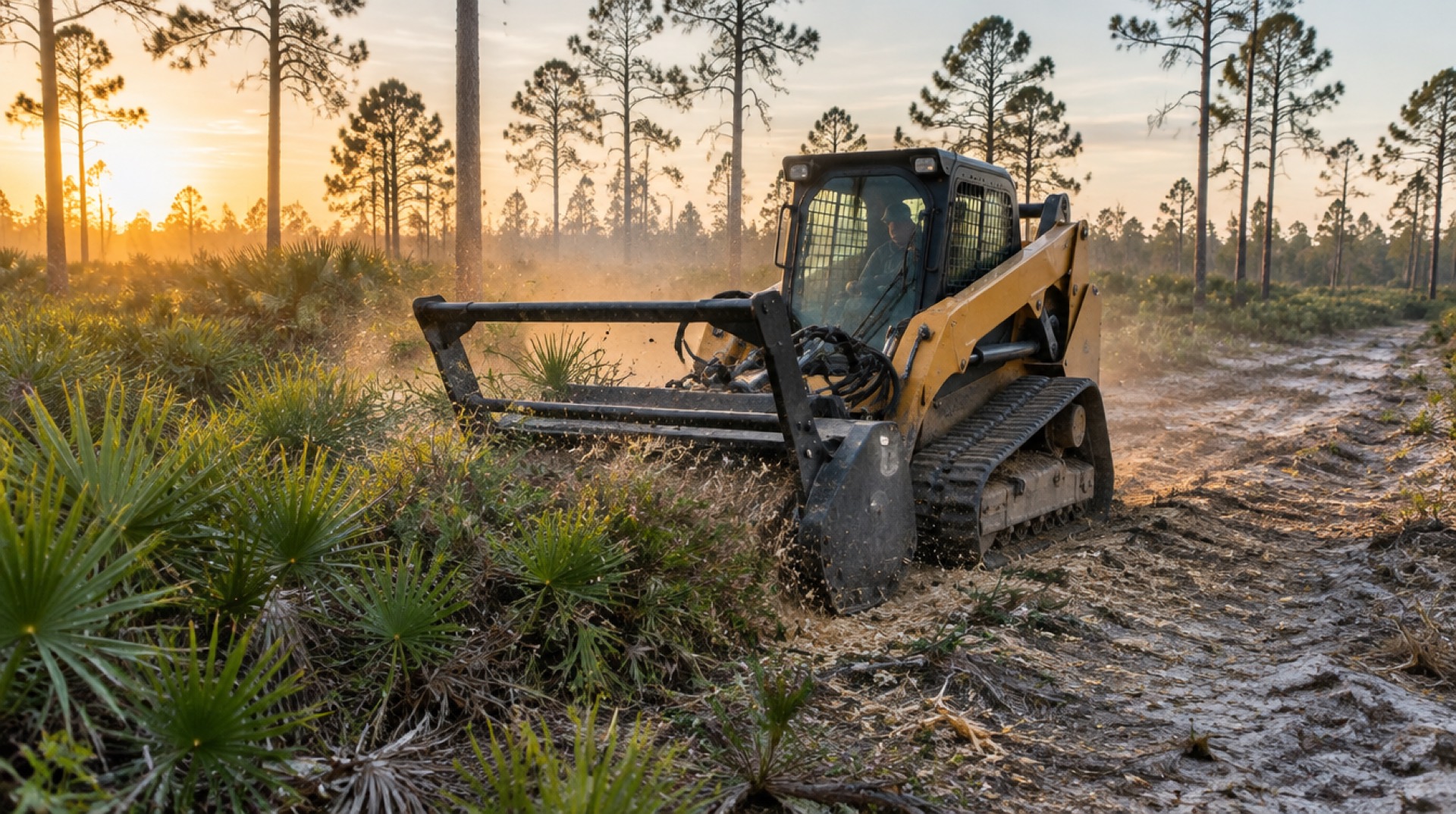
The working end is a heavy drum lined with teeth, mounted on a tracked carrier or a skid steer. The operator walks it into the brush and the drum chews everything in front of it down to about ground level. What's left is a mat of shredded wood and leaves, with the trees you wanted to keep still standing.
It fits a lot of Brevard work: opening a palmetto-choked lot in Palm Bay, thinning the understory on a few acres in Grant-Valkaria, cutting a trail or a fence line, knocking back a pepper thicket by a pond. It's a weaker fit where the ground has to end up bare, like a house pad, or where the trees are big enough to need felling first.
Why it suits small lots here
Burning used to be the cheap way to get rid of cleared brush, and on most residential lots it's off the table. Every land clearing pile burn in Florida needs Florida Forest Service authorization. Residential piles must sit 300 feet from occupied buildings other than the owner's, 100 feet from paved public roads and 50 feet from wildlands or brush (FFS, Know the Law). Put those distances on a quarter-acre in Port Malabar with houses on both sides and there's nowhere left for the pile. Infill lots in Melbourne and West Melbourne run into the same wall.
Brevard's drought ban doesn't change that math. The county bans open burning automatically when its Keetch-Byram Drought Index average reaches 500, but state-permitted burns, including FFS-authorized pile burns, are excluded from the county ban (Brevard County Code s. 50-1). The Forest Service setbacks are what rule out burning on a small lot.
Hauling is the other route. It leaves clean sand but means trucks, loading time and dump fees. Mulching skips those, which can bring the price down, though the crew's number after walking the land is the one that counts.
What happens to the mulch if you build
A mulch layer is fine on land you're keeping wooded, a pasture edge or a trail. Under a house it's a different story. Many builders want the pad area down to clean sand before fill goes on, so ask yours before the mulcher comes. Otherwise you may pay once to mulch and again to scrape the chips off the pad.
Palm Bay counts mulching in place as one of the ways to grub, which means taking out underbrush. Its grubbing permit doesn't cover clearing, scraping, filling or removing protected trees, and single- and two-family sites under 1 acre are exempt from it (Palm Bay Code s. 175.015). Removing trees on those lots falls under the city's separate clearing permit. The permit guide covers the rest of the county.
Burrows, scrub and the 25-foot line
Mulchers spend their days in sandy palmetto ground, and that is gopher tortoise country. FWC requires a permit before clearing, grading or site prep within 25 feet of a potentially occupied burrow, and no permit is needed if all the work stays at least 25 feet away (FWC gopher tortoise permits). A burrow under palmetto is easy to miss from a machine seat, so walk the land first and flag every hole.
Low, scrubby oaks on bright white sand can mean Florida scrub-jay habitat. FWC lists the bird as federally threatened and names habitat loss from development as a main threat (FWC scrub-jay profile). If your land looks like that, read the scrub-jay guide before anyone mulches it.
Questions to ask before you book
Two mulching quotes can describe very different jobs. These questions sort them out.
- How fine will the mulch be, and how many passes are included?
- Which trees come down, and how are the bigger ones handled?
- Are stumps left at ground level or ground below grade? Grinding below grade breaks ground, so who places the Sunshine 811 request?
- How close will the machine work to the fence, the septic tank or the well?
- What's the plan if a burrow turns up halfway through?
- Is a second pass for regrowth priced in, or extra?
Questions people ask
What is forestry mulching, and is it better than bulldozing?
Mulching is one machine cutting and grinding vegetation in place. Bulldozing pushes trees and brush into piles that then have to be hauled or burned. Mulching leaves the topsoil and a chip layer where they were; bulldozing leaves bare ground, which suits a house pad better. Neither wins everywhere. The mulching vs. bulldozing guide compares them.
Will palmetto and Brazilian pepper grow back after mulching?
Brazilian pepper will. UF/IFAS says large stands resprout vigorously after mechanical removal, so the stumps usually need herbicide or stump treatment (UF/IFAS plant directory). For palmetto and other natives, ask the crew what regrowth to expect on your ground and whether a follow-up pass is part of the price.
Can the brush be burned instead?
Rarely on a residential lot. Every land clearing pile burn needs Florida Forest Service authorization, and the residential setbacks rule out most lots in town (FFS, Know the Law). Mulching or hauling is the realistic choice.
What's the difference between lot clearing, bush hogging and forestry mulching?
Bush hogging is heavy mowing. It cuts grass, weeds and light brush and leaves the stubs. Forestry mulching grinds brush and small trees, woody stems and all, into chips. Lot clearing is the whole job of getting ground ready to build, which can include mulching, tree removal, stumps and haul-off. For the mowing side, see overgrown lot cleanup.
Does mulching need a permit?
It can. Brevard County's definition of land clearing includes cutting down vegetation, and the county requires a permit before land clearing unless the property is exempt (Brevard County Code s. 62-4337). Palm Bay handles underbrush mulching under its grubbing rules. Check the permit guide for your area.
Last reviewed October 7, 2026. General information, not legal or professional advice. Check the linked sources for the current rules.
Sources
- Florida Forest Service, Know the Law (land clearing burns)
- Brevard County Code s. 50-1, open burning
- Palm Bay Code of Ordinances, Chapter 175 (tree protection and land clearing)
- FWC, Gopher tortoise permits
- FWC, Florida scrub-jay profile
- Sunshine 811, frequently asked questions
- UF/IFAS Plant Directory, Brazilian peppertree
- Brevard County Code s. 62-4337, permit required